Pipe fittings can look simple in a product photo, but the tooling discussion changes quickly when the part includes a branch, an internal bore, a thread, a sealing surface, a bend, or a family of sizes. A supplier can still review an early concept, but the quotation should show which inputs are confirmed and which decisions remain open.
This guide is a buyer-side checklist for a pipe fitting mold RFQ. It is not a universal mold specification and it is not a customer case study. The goal is to help you send a package that makes the first engineering reply more useful.
For the commercial scope and typical project inputs, see our pipe fitting mold services page.
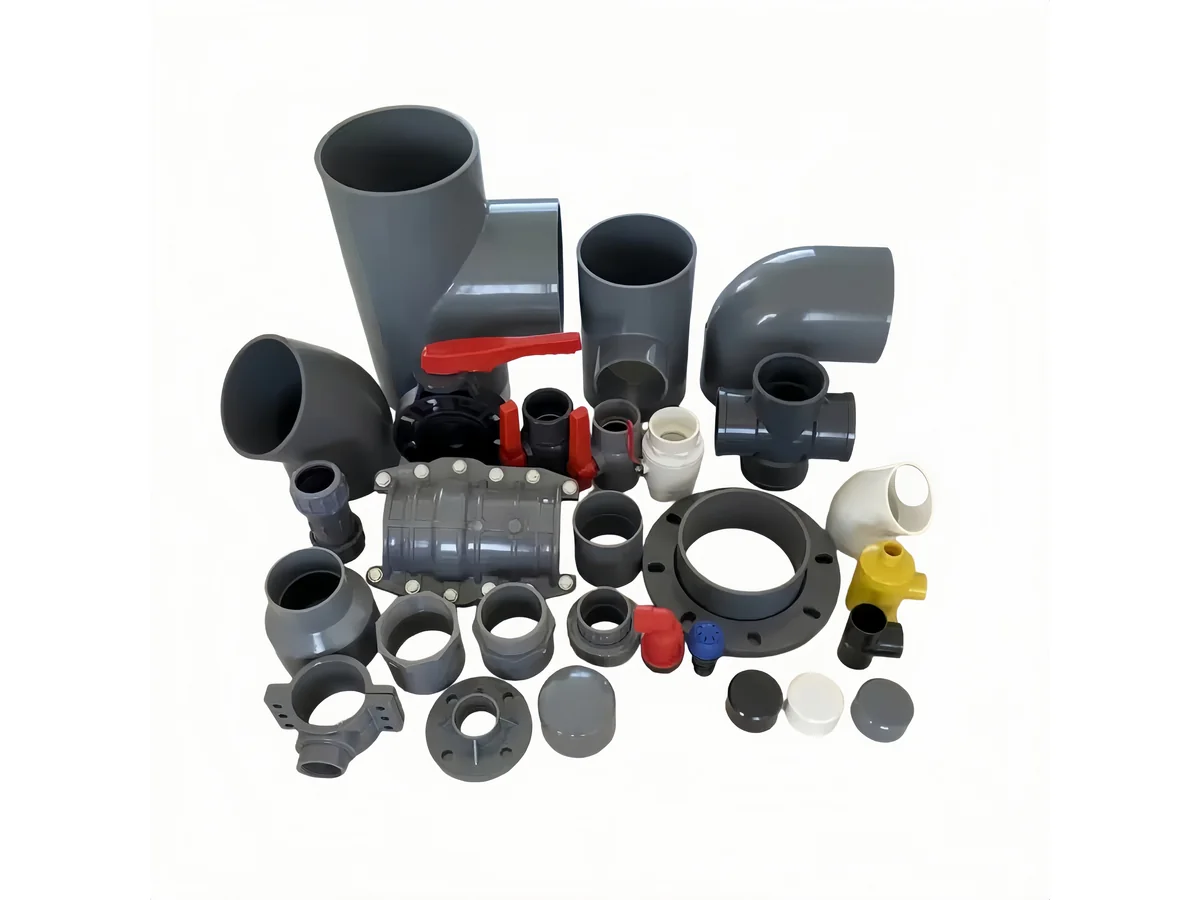
Reference-only image from the JFMOULD project image library. It illustrates fitting shapes, not a customer program, approved dimensions, material compliance or production results.
Start with a photo or a short fitting description
You can ask about a pipe fitting mold before your drawings are ready. Send a photo or describe the fitting, its approximate size and the material if known. Leave undecided details open; the full checklist below is for developing a firm quotation, not a condition for asking a question.
A first message can be: “I need a mold for a [tee / elbow / other fitting], approximately [size]. I have [photos / a sample / drawings]. The material is [known / undecided]. What information would you need next?”
Send your pipe fitting mold question.
1. Identify the fitting and the controlling revision
Start with the part, not with a preferred mold layout. Tell the supplier whether the RFQ covers a tee, elbow, reducer, socket, union, valve body, or a family of related fittings. For each part, list the information that controls fit and function:
- the latest 3D model and dimensioned 2D drawing;
- nominal sizes, outside and inside interfaces, angles, branch orientation and connection method;
- thread, seal, socket, groove or mating features that must remain functional;
- units, datums, critical dimensions and any drawing revision or release status; and
- whether the file is production-ready, preliminary, or still open for DFM feedback.
If the model and drawing do not match, mark the controlling file and the open conflict. A supplier should not silently choose one version and build the quotation around it.
2. State the resin and the service conditions
“PVC fitting” or “plastic pipe part” is not always enough for a tooling quote. Provide the exact commercial grade when it is known. If it is not known, state the resin family and what still needs approval. Include, where applicable:
- PVC, CPVC, PP, PPR, ABS or another specified compound family;
- supplier and grade, filler, color, stabilizer or other formulation notes;
- permitted regrind or recycled-content rules;
- temperature, pressure, chemical exposure or sealing conditions that affect the part; and
- who owns approval of a material or formulation change.
The material affects shrinkage assumptions, processing discussion, appearance and the way the toolmaker evaluates exposure. For PVC programs, see our PVC fitting mold steel guide before turning a broad material label into a universal steel requirement.
3. Give enough demand information to discuss cavities
Cavity count is not an isolated price choice. Give the supplier the planning basis behind it:
| RFQ input | What to write down |
|---|---|
| Annual demand | Forecast, committed volume, peak volume and expected program duration |
| Product mix | One fitting, multiple sizes, or a family tool under consideration |
| Batch pattern | Typical order size, peak season and changeover expectations |
| Sampling plant | Target press, machine interface, local mold standard and available utilities |
| Tool destination | Receiving plant, shipping destination and any export-packing or documentation needs |
| Timing | Quote due date, design freeze, first trial target and production need date |
If the annual volume or target press is unknown, say “open” instead of forcing a cavity count too early. Ask the quotation to state the demand, cycle, press-envelope and maintenance assumptions behind its proposed layout.
4. Ask for a geometry and tooling risk review
Pipe fittings often move the important question to the inside of the part. Ask the supplier to comment on the following points against the current geometry:
- where the parting line could sit and how it affects the seal or cosmetic surface;
- whether the branch, bend, thread or internal bore creates an undercut or requires a moving core;
- whether slides, lifters, collapsible cores, unscrewing or another mechanism is being proposed;
- where the gate, runner, venting and likely weld-line areas are expected;
- how the fitting will be supported and ejected without damaging a sealing or connection surface; and
- which areas need cooling attention because of wall changes, enclosed cores or difficult access.
General DFM references commonly review wall thickness, draft, undercuts and ejection together rather than treating them as separate cosmetic checks. They are starting points, not permission to copy a generic number into a pipe-fitting specification. The final decision needs the actual fitting, resin, surface requirement and production process.
Match the review to the fitting shape
- Tee: mark all three connection interfaces and ask how the branch cores meet, withdraw, and remain accessible for maintenance. Use the PVC tee engineering example to organize the discussion.
- Elbow: identify the bore path and ask the supplier to explain the proposed core movement and release clearance against a section view.
- Union or threaded fitting: include the mating component and thread or seal specification; ask which features constrain the release method and how fit will be checked.
Request a marked-up section or tooling concept for unresolved geometry. A mechanism name alone is not enough to approve the design.
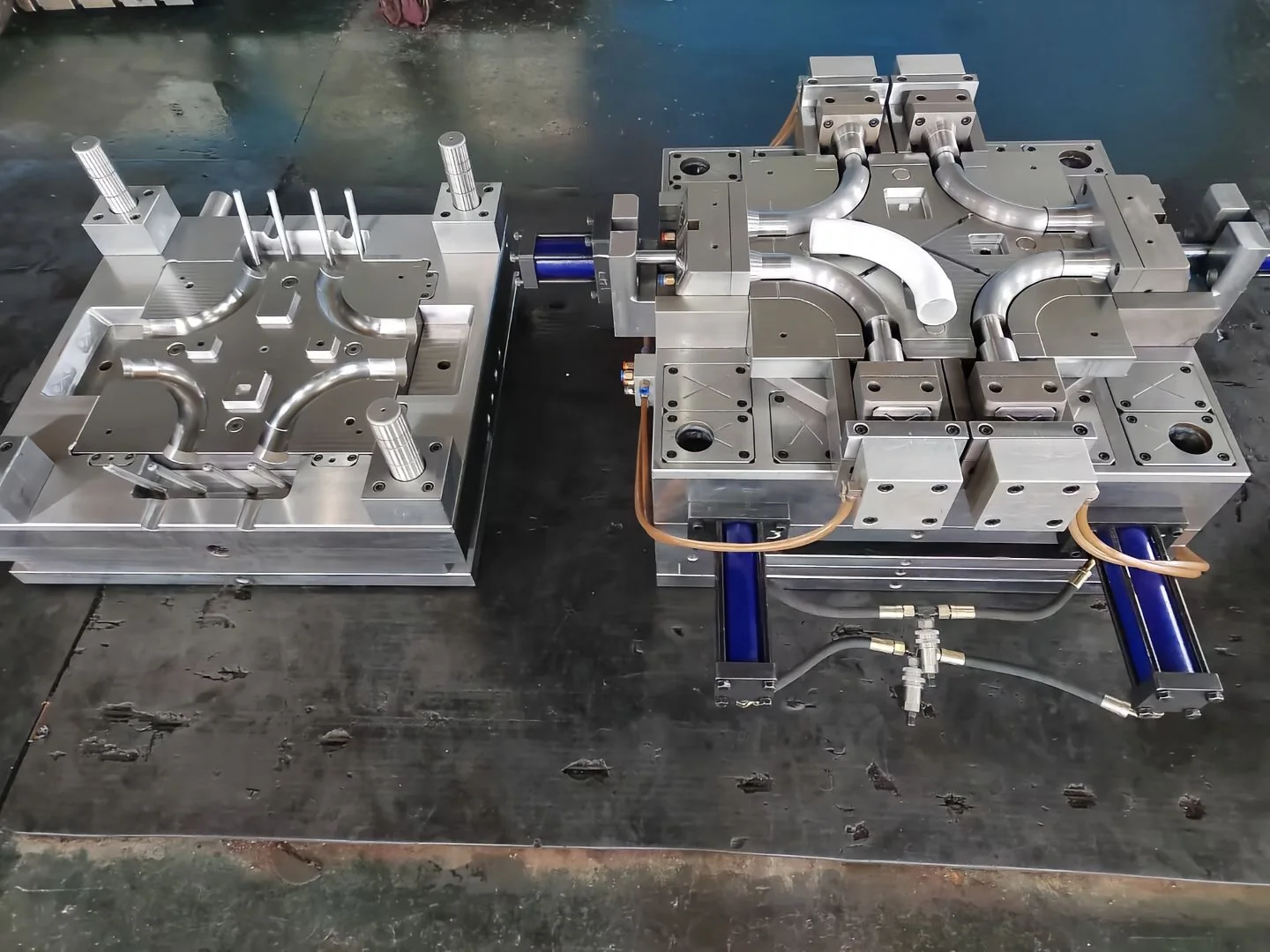
Reference-only tooling image from the project image library. The visible mold structure is not presented as the proposed structure for a buyer’s part.
5. Define what must be checked on the first samples
The RFQ should tell the supplier how the part will be judged after sampling. Separate critical requirements from preferences. Useful inputs include:
- critical outside and inside dimensions, including the measurement location;
- fit, thread, sealing, insertion or pressure-related acceptance requirements;
- permitted flash, parting-line witness, gate vestige and cosmetic limits;
- color, gloss, texture or marking requirements;
- sample quantity, resin lot, trial conditions and inspection report expectations; and
- the person or team who approves a dimensional or cosmetic deviation.
If the measurement method is not decided, keep it visible as an open item. A quotation can list a proposed inspection approach, but it should not turn an unapproved method into a hidden acceptance criterion.
For tolerance and acceptance discussions, ISO 20457 is a useful public reference, but it does not replace the buyer’s functional requirements or a written agreement with the supplier: ISO 20457:2018.
6. Make the quotation easy to compare
Ask every supplier to return the same basic fields. At minimum, the quote should identify:
- proposed cavity count and the demand basis;
- mold structure and any moving-core or thread solution;
- runner and gate concept, with open design decisions called out;
- steel by price-significant component, when relevant to the program;
- sampling scope, included reports and resin responsibility;
- correction rounds, change-control boundary and excluded work;
- spare parts, maintenance information, packing and delivery basis; and
- the assumptions that could change price, timing or tool construction.
This is more useful than comparing one headline price against another. Our broader injection mold RFQ preparation guide covers controlled files, assumptions registers and supplier comparison in more detail.
For competing proposals, use the mold quote scope comparison to record what is included, optional, or still open.
A simple pipe fitting RFQ cover note
You can place this short summary at the top of the package:
Part family:
Part number and revision:
3D / 2D files:
Resin and grade status:
Critical interfaces or sealing features:
Annual volume and product mix:
Target press or sampling plant:
Required samples and inspection basis:
Target timing:
Open questions for DFM and tooling proposal:
The open-questions line matters. If you need the supplier to recommend the parting line, cavity count, core mechanism or gate location, say so explicitly. That keeps a proposal separate from a buyer-approved requirement.
What not to assume from a photo
An image can help explain the fitting family or the tooling context, but it cannot confirm resin grade, pressure rating, dimensional compliance, cavity count, mold life, cycle time or customer approval. Reference images on this page are included to make the checklist easier to understand; they are not proof of a specific customer’s production result.
If you have the current fitting model, drawing, material status and demand estimate, send the package through the manual mold RFQ form. If some inputs are still open, label them clearly so the first reply can focus on the right engineering questions.
How this guide was prepared
The structure was informed by public injection-molding checklist and DFM guidance, including stage-specific RFQ/DFM inputs, review of draft and undercut risks, and the need to treat venting as part-specific. The wording and checklist above are original JFMOULD buyer guidance. It does not copy a third-party checklist and does not replace part-specific engineering review.
Sources and further reading
- Injection Molding Checklists by Project Stage — public example of separating RFQ, DFM, trial and acceptance inputs; accessed 2026-08-28.
- DFMPro for Injection Molding Design — public overview of draft, wall-thickness, undercut and ejection-related DFM checks; accessed 2026-08-28.
- Injection Mold Venting Design — public tooling reference showing why venting needs to be reviewed against the material and part; accessed 2026-08-28.
- ISO 20457:2018 — Plastics moulded parts — public standard reference for tolerances and acceptance conditions; accessed 2026-08-28.
Next step
Turn this article into an RFQ review.
Send files or a project brief, material, annual volume, or target timing notes. Jessica and the engineering team will review manufacturability risk and reply with initial engineering feedback or quotation planning. First human reply targeted within 24 hours.