
Automotive Tooling
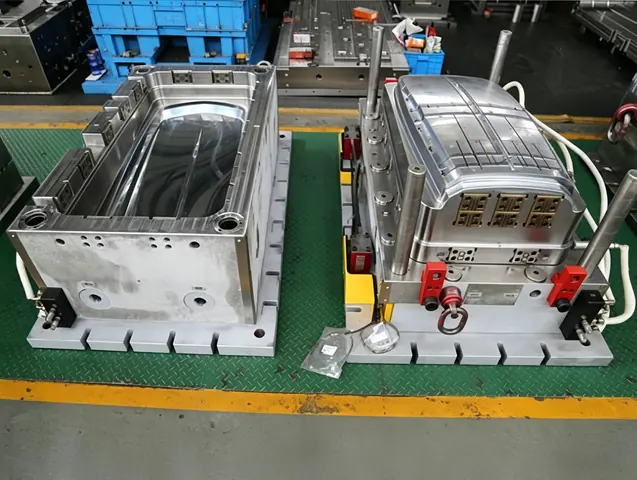
Automotive Mold Manufacturing
Automotive injection mold manufacturing for interior and under-hood parts, with DFM review for fit, finish, durability, and export tooling.
Automotive injection mold manufacturing for interior and under-hood parts, with DFM review for fit, finish, durability, and export tooling.
File ready? Send it now. No CAD yet? One-line brief works.
China injection mold manufacturerDFM supportCustom toolingTrial productionQuality measurementExport experience
Overview
How we evaluate automotive tooling fit
JF MOULD supports Tier 2 and aftermarket buyers who need custom auto parts mold supplier support for dimensional control, repeatable assembly fit and stable cycle time. We build tooling for interior brackets, airflow parts, clips and protective covers with manufacturability decisions locked in before steel cutting.
For buyers comparing an automotive interior mold China partner or a car bumper injection mold source, the practical difference is response speed and launch control. Our team targets a first human reply within 24 hours, then reviews gating, ribs and weld-line risk to align the mold plan with volume, resin and PPAP-style validation needs.
Procurement Check
What the quotation should make explicit
These items are project-specific. Confirm them in the written quotation instead of assuming a fixed MOQ, sample policy, lead time, or shipping boundary.
| Quote inputs | Send the part file, resin grade, annual volume, cavity target, critical fit zones, texture requirement, and your validation checklist. Unknown items can be marked for engineering review. |
|---|---|
| Trial and samples | Define the trial stages, sample quantity, measurement report, correction ownership, and acceptance criteria in the quotation before the tool build starts. |
| Delivery boundary | Tool lead time is confirmed after DFM. The quotation should list export packing, tool documents, spare parts, and the freight handoff point separately. |
| Incoterm | Confirm the Incoterm and named place in the order. Import clearance, duties, and destination charges are not assumed unless the quotation includes them. |
Capabilities
What we focus on for automotive mold builds
Fit-critical interior tooling
Door panel mold factory work, dashboard support parts and clip systems need stable shrinkage control, texture-safe venting and repeatable parting line management.
Heat and vibration resistant material support
We review PA, PP, ABS and filled engineering grades for sensor holders, under-hood housings and custom auto parts mold supplier projects with long-term durability targets.
Multi-cavity validation planning
For programs that need volume ramp-up, we balance gate layout, cooling and ejection so automotive mold supplier China projects can move from sampling to production with fewer changes.
Tolerance and assembly quote inputs
Automotive quotation needs part geometry, resin, tolerance zones, texture expectations, assembly interfaces and annual volume before the mold plan is reliable.
Technical Examples
Automotive tooling questions buyers review before RFQ
Technical ExampleEngineering review before quotation
Automotive2K interior trim bracket Mold Technical Review
A quotation-stage 2k interior trim bracket technical example covering geometry, engineering questions, buyer inputs, and acceptance planning without claiming a completed customer project.
- Review focus
- Review focus: Review mounting points, clips, ribs, wall transitions, draft, parting lines, and every assembly interface against the buyer's part file.
- Buyer inputs
- Buyer inputs: Provide the part file, resin grade, annual volume, cavity target, critical dimensions, texture or appearance requirements, machine limits, and validation checklist.
Technical ExampleEngineering review before quotation
AutomotiveUnder-hood component cover Mold Technical Review
A quotation-stage under-hood component cover technical example covering geometry, engineering questions, buyer inputs, and acceptance planning without claiming a completed customer project.
- Review focus
- Review focus: Review mounting points, clips, ribs, wall transitions, draft, parting lines, and every assembly interface against the buyer's part file.
- Buyer inputs
- Buyer inputs: Provide the part file, resin grade, annual volume, cavity target, critical dimensions, texture or appearance requirements, machine limits, and validation checklist.
Technical ExampleEngineering review before quotation
AutomotiveAir duct housing Mold Technical Review
A quotation-stage automotive air duct housing technical example covering geometry, engineering questions, buyer inputs, and acceptance planning without claiming a completed customer project.
- Review focus
- Review focus: Review mounting points, clips, ribs, wall transitions, draft, parting lines, and every assembly interface against the buyer's part file.
- Buyer inputs
- Buyer inputs: Provide the part file, resin grade, annual volume, cavity target, critical dimensions, texture or appearance requirements, machine limits, and validation checklist.
Ready to request a quote after these examples?
Send the part file or a short project brief before you keep browsing more case pages.
Buyer Questions
Questions we hear during automotive RFQs
Use these questions to judge fit before you send your RFQ.
If we start with one automotive part, what would you suggest?
Start with a fit-sensitive part: an air duct housing, trim clip, bracket, cover or sensor mount. It is a quick way to check tolerance, surface quality and assembly fit before moving a bigger program forward.
Can you take on bumper shells or larger exterior parts?
Yes. For larger parts we look first at wall balance, rib structure, gate position, weld lines and release. If deformation is likely, we point it out early so the design, tooling cost and lead time can be compared together.
What keeps interior clips and brackets consistent after sampling?
We start with cavity balance, cooling layout and first-trial measurements. After that, the focus is on shrinkage and fit points: clips, brackets and mating faces that need to stay consistent from batch to batch.
Which automotive plastics can we discuss first?
Yes. PP, ABS, PA and reinforced grades are common in these projects. The material choice changes gate wear, venting, warpage and tool life, so we confirm it before finalizing the mold structure.
What files and details help you reply faster?
A 2D or 3D file is the best start. Add material, annual volume, target timing, wall thickness range and key tolerances if you have them. With that, the first review is usually much clearer.
Why can't I get a fixed price before you see the files or a clear brief?
Because the same-looking part can need a very different mold once steel, cavities, texture, tolerance, tool life and timing are known. Files or a clear brief let us quote the real job instead of guessing a low number.