
Threaded Caps & Closures
Bottle Cap Mold Manufacturer for Threaded Closures
Bottle cap mold manufacturing for threaded closures, with DFM review of release, sealing, cooling, cavity strategy, and export tooling requirements.
Threaded bottle cap and closure molds with automatic unscrewing review and a direct RFQ path.
Drawing ready? Send it now. No CAD yet? A sample photo and short production brief can start the fit review.
China injection mold manufacturerDFM supportCustom toolingTrial productionQuality measurementExport experience
Quick RFQ Route
Send the details that control thread release and mold output
A useful first review starts with the cap geometry, mating thread, material and production target. Send what you have; our team will identify the missing quotation inputs.
- 2D/3D file, cap sample, or clear sample photos
- Resin and mating bottle-neck or thread requirement when known
- Annual volume or preferred cavity range
- Injection-machine, runner, export-mold and timing requirements when known

Shop-floor Proof
Recent bottle cap molds mold, trial and part photos
Real mold, trial and finished part images shown early so buyers can judge the shop-floor evidence before sending the RFQ.
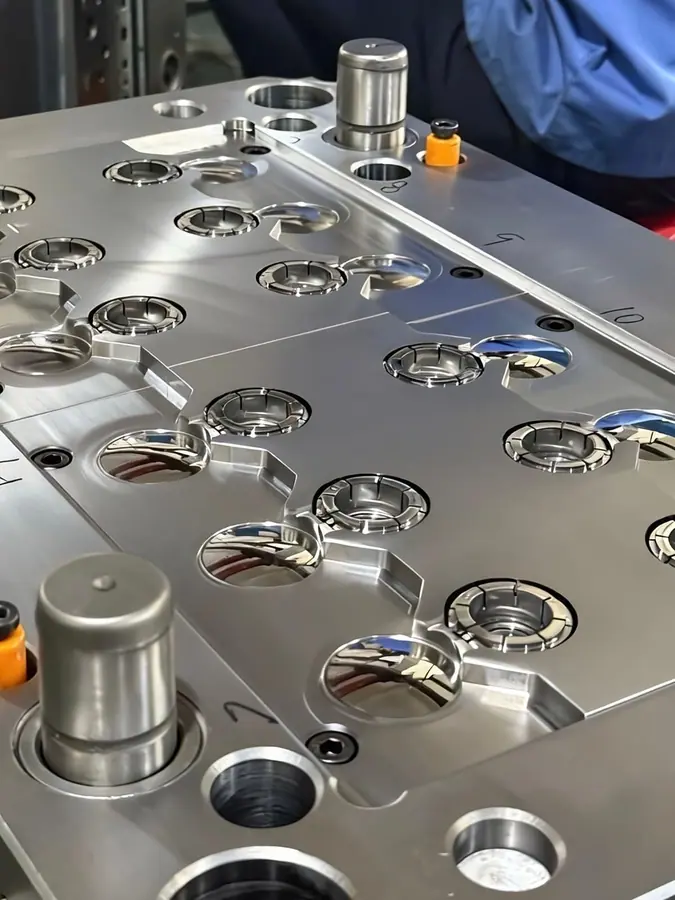
Tooling detail
Close-up factory view of cap-mold tooling before project-specific engineering details are confirmed.
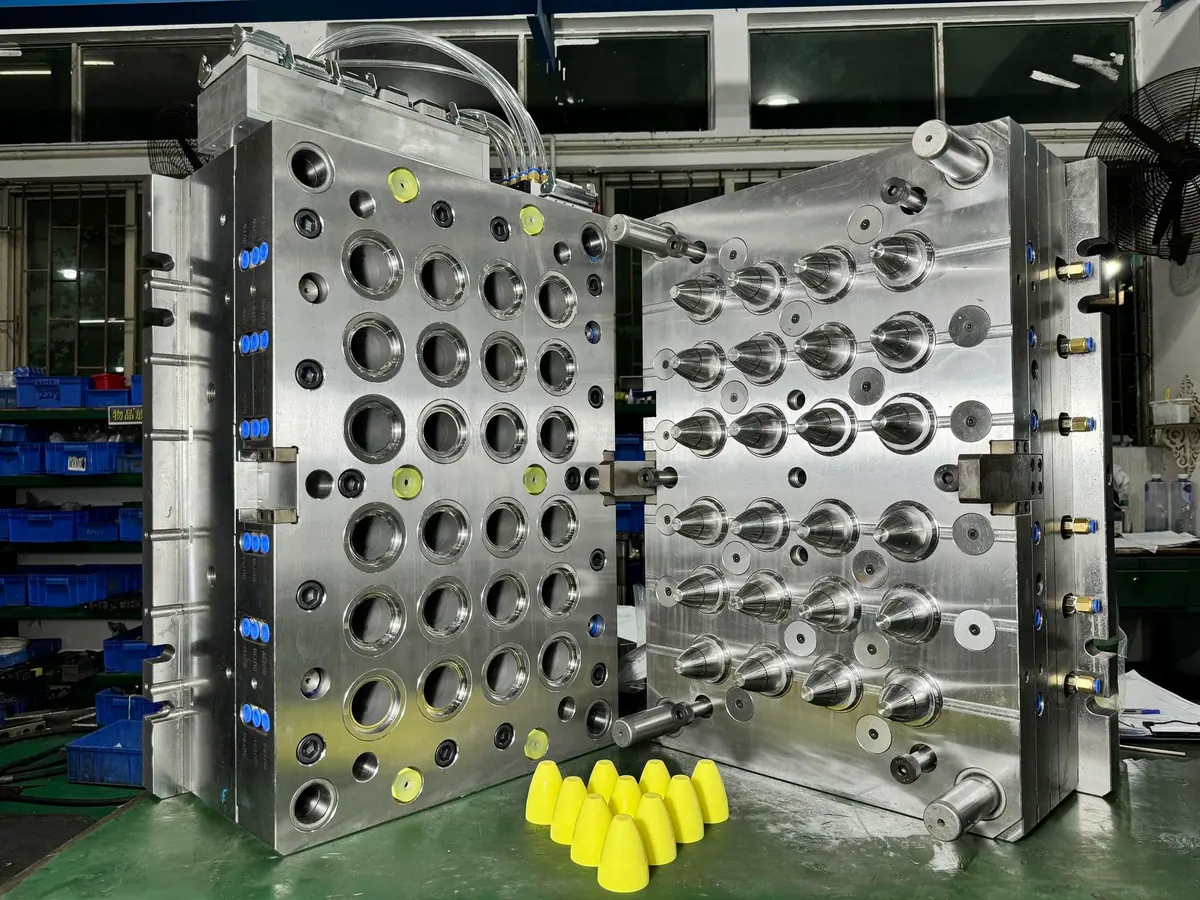
Open mold and molded parts
Open tool and molded cap parts shown as representative shop-floor evidence, not a published customer case study.
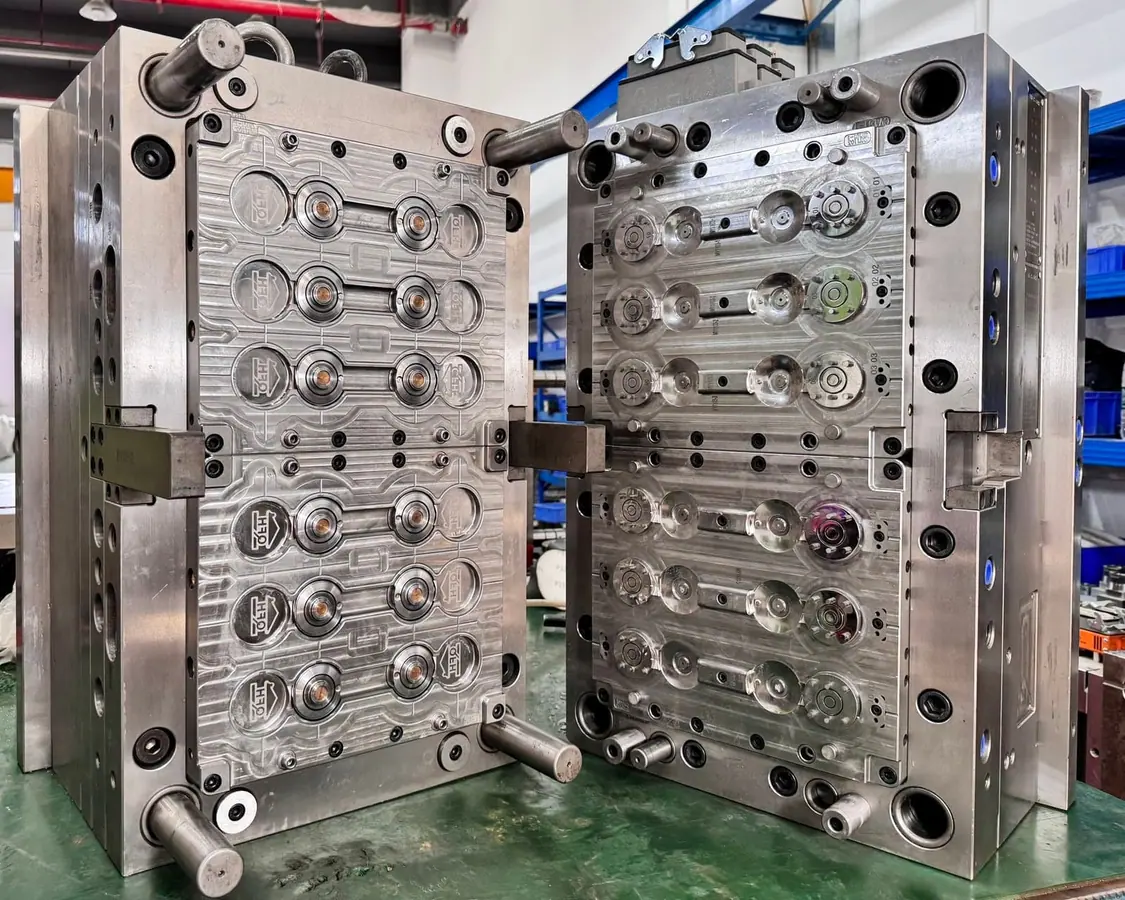
Open tooling layout
Open cap-mold tooling with visible cavity layout; final tooling details depend on the buyer's drawing and production brief.
Overview
How we evaluate bottle cap molds tooling fit
Threaded caps and closures need a release plan that protects the molded thread before ejection. JF MOULD supports bottle cap and other threaded plastic-part mold programs where the first engineering review must align thread geometry, resin behavior, release sequence and production volume.
Automatic unscrewing is reviewed when the thread cannot be released safely by a simpler method. The final structure still depends on the drawing, mating part, material, cavity target, machine setup and maintenance requirement, so those inputs are confirmed before the mold plan is priced.
Capabilities
What we focus on for bottle cap molds mold builds
Automatic unscrewing and controlled release
We review whether the threaded geometry needs controlled core rotation before ejection so the release method matches the part instead of forcing a one-size-fits-all structure.
Thread fit and ejection-risk review
The first review considers thread depth, mating fit, resin shrinkage, flash risk, deformation and the point at which the part can be ejected without damaging the functional thread.
Multi-cavity balance and cooling planning
For higher-output cap programs, cavity strategy, fill balance, cooling consistency and maintenance access are reviewed together before the production mold layout is fixed.
Quote inputs for a reliable mold plan
Cap diameter alone is not enough for quotation. Material, thread geometry, output target, machine information, runner preference, export standard and timing all influence the tooling plan.
Related Programs and Buyer Guides
Continue with the tooling route or decision guide that matches your next step
Buyer Questions
Questions we hear during bottle cap molds RFQs
Use these questions to judge fit before you send your RFQ.
When does a threaded cap need automatic unscrewing?
Automatic unscrewing is considered when the thread depth, geometry, resin stiffness or fit requirement makes forced release risky. We review the part and mating thread before selecting the release direction and sequence.
What should we send for the first bottle cap mold review?
Send a 2D or 3D file when available, plus the resin, mating neck or thread requirement, production volume, preferred timing and injection-machine information. These inputs make the first tooling discussion more reliable.
Can we start with a physical sample or photos?
A drawing is the clearest input. If CAD is not ready, send the sample details and clear photos so our team can confirm what can be reviewed and what measurements or files are still needed.
What determines the cavity strategy for a cap mold?
Part size, material, annual volume, cycle target, runner plan, cooling demand, release structure, machine capacity and maintenance access all affect the practical cavity strategy.
What thread and ejection risks are reviewed before approval?
The review covers thread fit, release timing, flash, shrinkage, deformation, ejection stability and how the molded part will be checked against its mating component or functional requirement.
Why can price and cycle time not be confirmed from cap diameter alone?
Two caps with a similar diameter can require different materials, threads, cavities, release structures, steel decisions, cooling layouts and validation work. Those details must be reviewed before price or timing is reliable.