
Thin-Wall Packaging
Packaging Mold Manufacturing
Packaging tooling for containers, cups, lids and cutlery. Share a product photo or drawing to review fit, wall thickness, production volume and the receiving machine before a tooling quote.
Packaging molds for containers, lids and cutlery. Start with a product photo or drawing; CAD can follow.
File ready? Send it now. No CAD yet? One-line brief works.
China injection mold manufacturerDFM supportCustom toolingTrial productionQuality measurementExport experience
Overview
How we evaluate packaging tooling fit
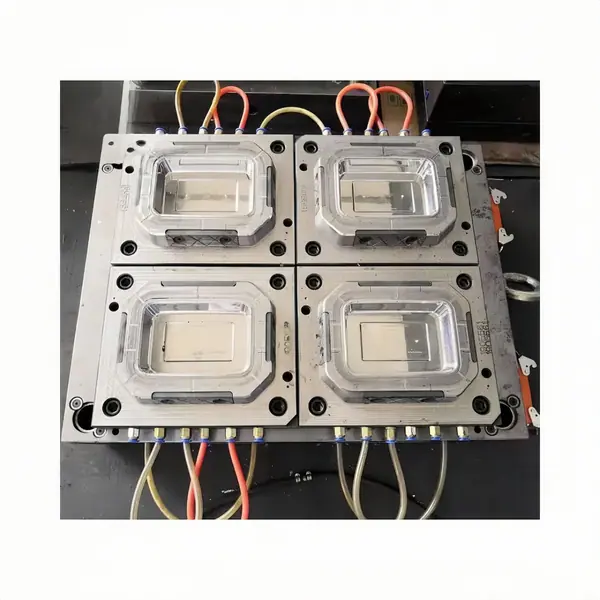
JFMOULD builds custom injection molds for cups, lids, tubs, trays and cutlery. Start with the packaging part you need to produce: its shape and material, together with wall thickness, cycle time, flow, and production volume, help define the tooling proposal. A photo or short price question is enough to begin; drawings can follow.
For thin-wall containers and IML packaging, the review covers filling, cooling, label area, nesting and ejection. Confirm the receiving machine and trial conditions before comparing cycle-time proposals. A target cycle is a planning assumption until the agreed trial demonstrates it.
Procurement Check
What the quotation should make explicit
These items are project-specific. Confirm them in the written quotation instead of assuming a fixed MOQ, sample policy, lead time, or shipping boundary.
| Quote inputs | Start a price discussion with a part photo, sketch, or short description. For a firm quote, confirm the part file, resin, wall thickness, cavities, annual volume, machine limits, decoration method, and cycle target. Mark undecided details as open. |
|---|---|
| Trial and samples | Agree on trial stages, sample quantity, stack or lid-fit checks, measurement scope, and who owns changes after each trial in the quotation. |
| Delivery boundary | Tool lead time is confirmed after DFM. Packing, documents, spares, trial resin, and freight handoff should be itemized instead of bundled into an unclear promise. |
| Incoterm | Confirm the Incoterm and named place. Destination clearance, duties, local handling, and machine-side commissioning are included only when written into the quotation. |
Capabilities
What we focus on for packaging mold builds
Thin-wall cycle optimization
We review runner, cooling and venting layouts together with the part wall thickness and resin. Compare cycle targets under the same machine and trial conditions, including how parts are removed and stacked.
IML and visual-surface planning
For in-mold labeling, review the label area, surface finish and container geometry together with the labeling and packing process. Share the label layout and handling requirements before the mold design is finalized.
High-volume cavity strategies
We review cavity count against the part size, receiving machine, output target and maintenance access. Confirm those assumptions before comparing the price of different cavity layouts.
Stacking and lid-fit checks
Provide the mating lid or container and explain how parts will be stacked and packed. Agree which dimensions and fit checks will be used to accept trial samples.
Related Programs and Buyer Guides
Continue with the tooling route or decision guide that matches your next step
Technical Examples
Packaging tooling questions buyers review before RFQ
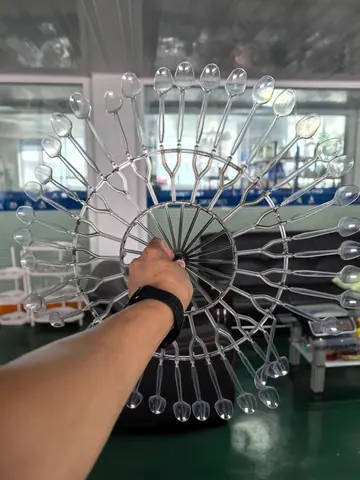
Spoon Injection Mold: Accepted and Shipped
A JFMOULD spoon injection mold project with sample photos, completed mold trials, customer acceptance, and mold shipment confirmed by the manufacturer.
- Project
- Manufacture an injection mold for the plastic spoons shown in the project photos.
- Result
- The customer accepted the mold, and the mold has been shipped.
Technical ExampleEngineering review before quotation
PackagingThin-wall cup Mold Technical Review
A quotation-stage thin-wall cup technical example covering geometry, engineering questions, buyer inputs, and acceptance planning without claiming a completed customer project.
- Review focus
- Review focus: Review wall thickness, rim and closure geometry, stacking or nesting features, label surfaces, draft, gate position, and ejection areas against the buyer's file.
- Buyer inputs
- Buyer inputs: Provide the part file, resin, wall-thickness target, annual volume, cavity target, machine limits, decoration method, stacking requirements, and target cycle for review.
Technical ExampleEngineering review before quotation
PackagingThin-wall takeaway container Mold Technical Review
A quotation-stage thin-wall takeaway food container technical example covering geometry, engineering questions, buyer inputs, and acceptance planning without claiming a completed customer project.
- Review focus
- Review focus: Review wall thickness, rim and closure geometry, stacking or nesting features, label surfaces, draft, gate position, and ejection areas against the buyer's file.
- Buyer inputs
- Buyer inputs: Provide the part file, resin, wall-thickness target, annual volume, cavity target, machine limits, decoration method, stacking requirements, and target cycle for review.
Ready to request a quote after these examples?
Send the part file or a short project brief before you keep browsing more case pages.
Buyer Questions
Questions we hear during packaging RFQs
Use these questions to judge fit before you send your RFQ.
Can I ask for a packaging mold price without CAD files?
Yes. Send a photo, sketch or short description of the cup, lid, tray or cutlery, with approximate dimensions and quantity if known. Leave undecided details open. We can start the discussion, then confirm drawings, resin, cavities and trial scope before a firm tooling quotation.
Can you build the mold around an IML label area?
Yes. We can review label window constraints, draft angle, anti-scratch surfaces and container nesting behavior for IML packaging mold development. Those checks help reduce rework when the label process and mold process must stay tightly aligned.
What usually slows down a PP box or takeaway lid mold?
We look at wall distribution, cooling path efficiency, gate type and venting. For a PP box mold or takeaway lid project, those factors usually drive fill quality and release speed more than cosmetic changes to the tool layout.
Can one supplier handle cups, lids, trays and buckets?
We can review cups, tubs, trays, lids, cutlery and buckets. Send the product list and identify matching parts, such as a tub and lid. Each part needs its own review of size, material, machine fit and output target before the tooling scope is confirmed.
What proof should we check before sending files or a project brief?
Review the linked spoon project for two sample photos and manufacturer-confirmed trial, acceptance and shipment status. Its cycle time, resin and cavity count are not published. For your own packaging part, agree the trial conditions, measurements and acceptance criteria; photos alone cannot verify production performance.
Why can't thin-wall packaging molds be priced from size alone?
Mold quotation depends on product structure: two similarly sized parts can need different gates, cooling, ejection and cavity layouts. Compare quotations using the same drawing revision, resin, wall thickness, receiving machine and output target. Ask each supplier to separate tooling, trials, corrections, spares and freight so the price comparison covers the same work.