The lowest mold quotation is not automatically the lowest-risk proposal. A useful comparison makes each supplier state what is included, what is assumed, what still needs buyer approval, and what evidence will close the project at trial and delivery.
Use this guide after preparing one controlled injection mold RFQ package. If suppliers receive different files, resin information, volume targets, or acceptance requirements, their prices and dates are not directly comparable.
A quick decision rule
Do not select a supplier from a capability list alone. Compare the quality of five written outputs:
- the input and assumption register;
- the DFM issue-and-decision log;
- the itemized quotation scope;
- the trial and acceptance plan; and
- the export handoff and responsibility matrix.
This is a sourcing checklist, not a claim that one process fits every part. Regulated, safety-critical, optical, high-tolerance, or automation-dependent programs need their own specialists, requirements, and approvals.
1. Give every supplier the same controlled inputs
Start with the same file revision and the same buyer brief. Record an input as Confirmed, Open for supplier proposal, or Not applicable; a blank cell lets suppliers make different hidden assumptions.
| Comparison input | What the buyer should control | What the supplier should state if it is open |
|---|---|---|
| Part definition | Controlling 3D/2D revision, units, datums, critical characteristics, cosmetic zones, and mating parts | Geometry used for quotation and any feature that still needs confirmation |
| Resin | Manufacturer and grade, filler, color, appearance, service conditions, and required compliance | Proposed grade and the effect of a later material change |
| Demand | Annual volume, batch pattern, peak demand, program duration, and whether figures are forecasts | Cavitation, press, cycle, and capacity assumptions used for the proposal |
| Tool destination | Target molding plant, press limits, interfaces, utilities, and local standards | Assumed machine envelope and items required at the destination plant |
| Quality and acceptance | Functional checks, critical dimensions, inspection method, sample quantity, and acceptance owner | Proposed measurement method and any gauge, fixture, or study excluded |
| Timing | Quote due date, design freeze, requested trial window, validation window, and production need date | Dependencies, approval time, and events that can change the schedule |
A supplier does not need every answer before an initial discussion. It does need to distinguish missing buyer input from its own proposal. The custom injection mold tooling page shows the project-fit and engineering boundaries to review before starting that discussion.
2. Compare the structure of the DFM response
A useful DFM response should connect an observable issue to a decision. Ask suppliers to use the same five-column format so your engineering and purchasing teams can close questions without losing context.
| DFM field | What to look for |
|---|---|
| Location and issue | The feature, surface, interface, or region is identified clearly rather than described as a general risk |
| Reason | The supplier explains the manufacturing or tooling concern without presenting an assumption as a measured result |
| Options | At least one practical response is shown, with the trade-off for part design, tooling, process, cost, or timing |
| Decision owner | Buyer, part designer, mold supplier, molder, material provider, or another named function is responsible for closing the item |
| Status and revision | The decision, date, source file revision, and open follow-up are recorded |
For example, cooling and differential cooling are relevant to ejection and warpage review, but a generic simulation screenshot does not prove that a production part will meet its functional requirements. Ask which inputs were modeled, which result is being interpreted, and which physical trial or measurement will verify the decision.
3. Normalize the quotation before comparing price
Request line-by-line scope instead of accepting “complete mold included.” A common comparison sheet exposes whether two similar totals actually cover the same work.
| Quotation boundary | Questions to require in writing |
|---|---|
| Tool concept | Dedicated or family tool, cavity assumption, runner and gate concept, ejection approach, and interfaces |
| Steel and components | Proposed family by price-significant component, supplied condition, hot runner, cylinders, fittings, electrical items, and allowed equivalents |
| Engineering | DFM rounds, mold design review, analysis, drawing package, approvals, and the point at which a buyer change becomes a commercial change |
| Trials and samples | Trial stages, machine time, resin responsibility, sample quantities, reports, measurement, and sample freight |
| Corrections | Supplier-responsible correction boundary, buyer-requested changes, approval route, and how price or timing changes are documented |
| Spares and documents | Wear parts, quantities, identification, material records, 2D/3D tool files, manuals, and maintenance information |
| Packing and logistics | Preservation, export packing, lifting provisions, freight, insurance, customs, duties, destination charges, unloading, and storage |
| Support | Remote or on-site support, installation, destination trial, travel costs, training, and response boundary |
| Exclusions | Gauges, fixtures, automation, special testing, production resin, validation, taxes, and any buyer-supplied item |
Do not ask a supplier to hide uncertainty behind one fixed number. Keep an open line visible and require the effect on price, timing, layout, trial, and acceptance to be recorded when the assumption closes.
4. Agree on trial evidence and acceptance before steel is cut
“Samples supplied” is not an acceptance plan. Define what each agreed trial stage must answer and who decides whether the tool can move forward.
- Identify the controlling part and mold revision for every sample set.
- Record resin grade, color, machine, process conditions, cavities sampled, and known deviations.
- List the dimensional, appearance, assembly, sealing, load, or other functional checks that apply to the part.
- Separate supplier corrections from buyer design changes and record the commercial approval path for each.
- State which samples, measurement records, process sheets, videos, or other artifacts will be delivered.
- Define the acceptance owner and the disposition: accepted, accepted with open actions, repeat trial required, or change approval required.
ISO 20457 addresses tolerances and acceptance conditions for plastics molded parts, but it does not replace the part’s functional requirements or the buyer-supplier agreement. Use the applicable drawing, product standard, test method, and approved project requirements as the source of truth.
5. Make the export handoff and Incoterm explicit
Write the Incoterm rule, version, and named place in the quotation and purchase order—for example, not just FCA, but the agreed rule and named handoff location. ICC’s Incoterms 2020 materials explain that the rules allocate tasks, costs, and risks between seller and buyer. They do not make an unclear tooling scope clear by themselves.
Use a responsibility matrix for:
- export packing and preservation;
- pickup, main freight, insurance, and destination handling;
- export and import clearance;
- duties, taxes, brokerage, demurrage, and storage;
- unloading, plant movement, installation, and destination trial; and
- documents, spares, lifting information, utilities, and post-delivery support.
For a US destination, do not assume the overseas supplier or freight forwarder replaces the importer of record’s obligations. US Customs and Border Protection describes a reasonable-care responsibility for importers. Confirm the responsible importer, broker instructions, classification inputs, value documents, and recordkeeping with qualified logistics or customs advisers for the actual shipment.
6. Score evidence, not presentation
Score each supplier from 0 to 2 on the same worksheet: 0 = missing, 1 = partly defined, and 2 = clear, attributable, and revision-controlled.
| Review area | 0–2 score question |
|---|---|
| Input control | Does the proposal identify the exact files and separate confirmed inputs from assumptions? |
| DFM decisions | Does each material issue have a reason, options, owner, and status? |
| Quote comparability | Are tooling, trials, corrections, documents, logistics, support, and exclusions itemized? |
| Trial evidence | Are sample identity, process context, checks, deliverables, and disposition defined? |
| Change control | Can the team trace who approved a change and its price, timing, and technical effect? |
| Export handoff | Are the Incoterm, named place, customs roles, charges, packing, and destination support explicit? |
| Communication continuity | Is there one accountable route from RFQ clarification through trial and shipment? |
Keep the raw notes beside the score. A total helps comparison, but it should not overrule a missing safety, quality, ownership, or delivery requirement.
7. Apply the checklist to a pipe fitting mold RFQ
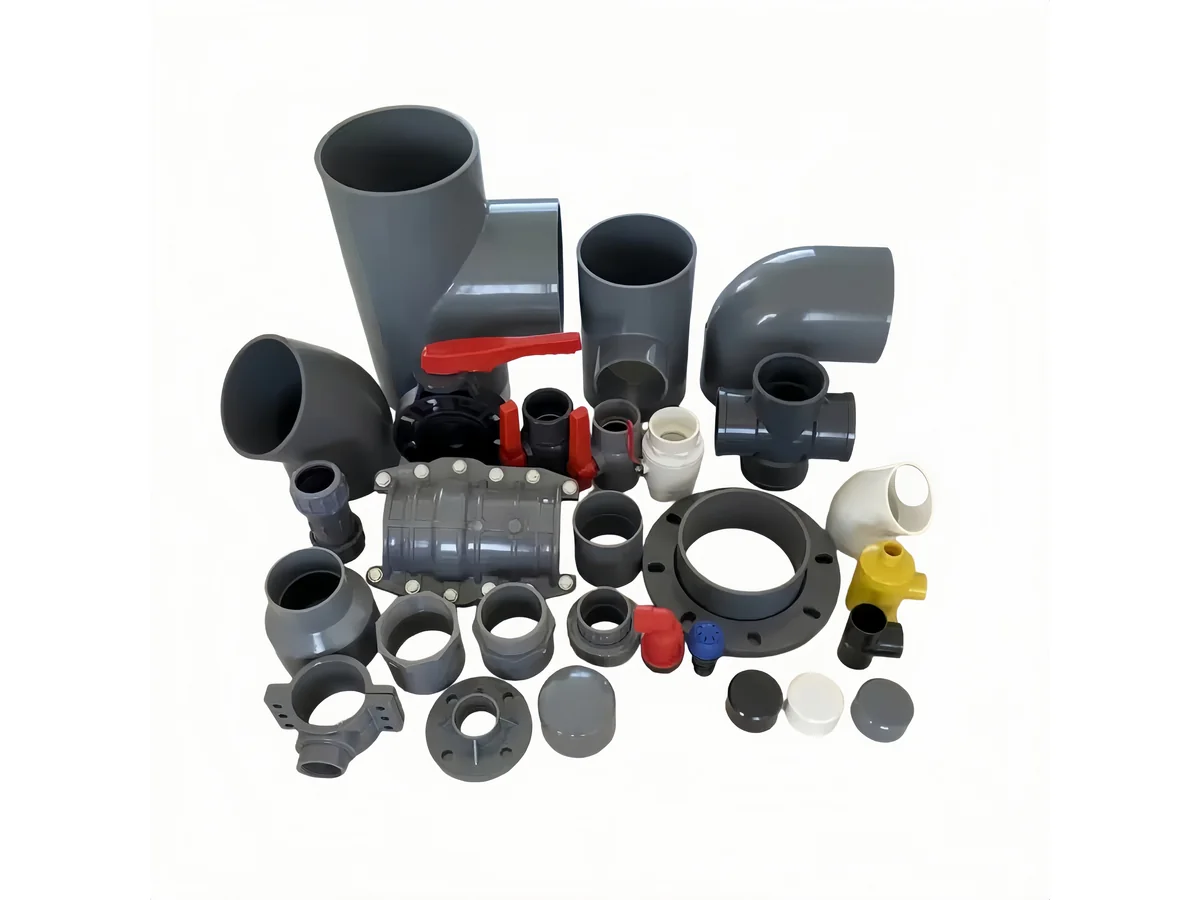
For a PVC, PPR, or PP fitting, add the fitting standard, exact resin, pressure or drainage application, sealing and thread requirements, size family, annual volume, cavity preference, molding-machine limits, and the agreed leak or fit checks. Then compare how each supplier connects those inputs to core support, shrinkage, cooling, ejection, and sample acceptance.
The pipe fitting mold industry page provides a procurement-input, trial, delivery, and Incoterm checklist for this program type. Its linked images and technical example are reference material, not proof of a named customer result.
Red flags to resolve before a purchase order
- The quotation does not identify the controlling file revision.
- “All included” replaces an itemized scope and exclusions list.
- A fixed lead time is offered without approval, material, component, trial, or change dependencies.
- Project photos or sample images are presented as proof of a customer outcome without a traceable evidence boundary.
- Mold life, cycle time, cavity count, steel grade, certification, or acceptance is promised without project-specific conditions and records.
- Trial samples are offered without a measurement, functional-check, or disposition plan.
- The Incoterm has no version or named place, or customs and destination charges remain unstated.
- Buyer changes and supplier corrections use the same undocumented change path.
Public sources used for this checklist
- ICC — Incoterms 2020, used for the allocation-of-tasks, costs, and risks boundary.
- US Customs and Border Protection — Reasonable Care, used for the US importer-responsibility boundary.
- Autodesk Moldflow — Cooling stage and differential-cooling warpage indicator, used only to frame cooling and warpage review questions.
- ISO 20457:2018 — Plastics moulded parts — Tolerances and acceptance conditions, used for the tolerance-and-acceptance scope boundary.
These sources do not verify a JF MOULD customer project, result, delivery promise, or universal tooling method. Part-specific engineering, commercial, quality, logistics, and regulatory review remains necessary.
If your comparison package is ready, send the controlling files and open assumptions through the manual DFM and RFQ form. Keep this worksheet beside the supplier replies so the final decision stays tied to the same scope.
Next step
Turn this article into an RFQ review.
Send files or a project brief, material, annual volume, or target timing notes. Jessica and the engineering team will review manufacturability risk and reply with initial engineering feedback or quotation planning. First human reply targeted within 24 hours.