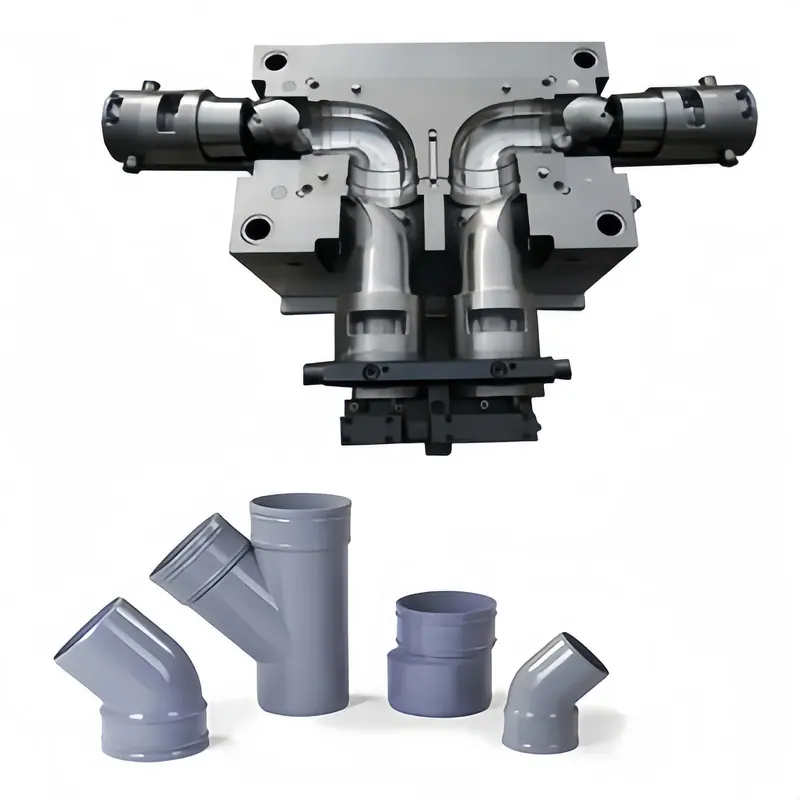
A mold quotation that says only P20, H13, or S136 leaves important purchasing questions unanswered. The same family label can cover different steelmakers, regional designations, product variants, supply conditions, cleanliness routes, section sizes, and later processing. It also does not say which mold component receives that material.
For an export tool, compare the exact product and component specification against the released resin, additives, finish, geometry, operating environment, maintenance capability, repair route, and spare-part plan. The aim is not to crown one family as the best steel. It is to make each supplier’s material proposal traceable and technically reviewable.
First clarify what the grade name means
Before comparing quotations, normalize each steel callout using the same six factors:
- Trade name: Record the steelmaker’s exact product name; a family label alone does not identify the supplied product.
- Regional designation: Record the standard and designation used in the quotation or certificate instead of assuming a cross-market name is identical.
- Modified grade: Ask whether the quoted material is a modified or proprietary chemistry within the broader family.
- ESR: State whether electroslag remelting is part of the specified product route where cleanliness, polish, or consistency is relevant.
- Delivery condition: Record whether the component material arrives prehardened, annealed, or in another named supply condition.
- Heat treatment: Separate the steel supplied by the mill from the later hardening, tempering, stress-relief, nitriding, or coating route applied to the component.
These family labels are comparison shorthand, not a claim that every supplier’s P20, H13, S136, or 420-family steel is universally equivalent.
That boundary matters in both directions. A regional designation does not by itself prove a particular steelmaker’s product route, while a proprietary trade name does not automatically make the product interchangeable with every grade placed in the same family. Require the quotation, drawing, bill of materials, certificate, and component marking to use a traceable specification.
Decision table: P20-family vs H13-family vs S136/420-family
This table organizes questions for supplier review. It is not a substitute for steelmaker data, heat-treatment instructions, or part- and tool-specific engineering.
| Steel family | Supply concept to verify | Useful strengths to evaluate | Limits and trade-offs to review | Buyer questions |
|---|---|---|---|---|
| P20-family | Often discussed as prehardened mould steel, but confirm the steelmaker, exact grade, section-size condition, and certificate. Uddeholm Impax Supreme is one P20/1.2738-family example, not a universal synonym for P20. | General cavity and core work where machinability, predictable prehardened supply, and repairability fit the program. | Corrosion, polish, wear, local stress, and large-section properties still depend on the specified product, condition, geometry, and processing. | Which maker and grade are supplied, in what condition, for which components, and on what resin, finish, and maintenance basis? |
| H13-family | Commonly specified as hot-work tool steel for heat-treated inserts or components; confirm chemistry, remelting route, delivery condition, and the complete heat-treatment specification. Uddeholm Orvar Supreme is Uddeholm’s ESR H13/1.2344 example. | Localized components exposed to heat checking, wear, compression, or thermal cycling when the design and heat treatment support that use. | Machining, distortion, cracking risk, repair welding, surface treatment, and final properties depend on section, geometry, heat treatment, and process control. | Which components need this family, who heat treats them, how are results certified, and what acceptance method applies after treatment? |
| S136/420-family | Corrosion-resistant stainless mould-steel shorthand; verify the steelmaker, exact grade, ESR status, supply condition, and heat-treatment route. Uddeholm Stavax ESR is Uddeholm’s corrosion-resistant stainless mould-steel example. | Applications where corrosion resistance, cleanliness, polish potential, storage conditions, cooling-water exposure, or resin behavior justify evaluation. | Stainless does not mean maintenance-free, automatically optical, or interchangeable across suppliers; polish, corrosion, wear, and dimensional results remain process- and application-dependent. | Is the driver resin corrosion, cooling water, storage, polish, or cleaning, and which component requires the specified grade and finish route? |
Impax Supreme, Orvar Supreme, and Stavax ESR are used here only as named Uddeholm examples that help a buyer see why the exact manufacturer and product matter. Their published product information should be read for those products; the names must not be expanded into blanket claims about every material marketed under P20, H13, S136, or 420-family terminology.
Example: using the steel comparison table
Illustrative comparison, not customer quotations: one proposal names a steel grade for the cavity and core, while another lists only “mold steel.” Do not rank them by the grade name alone. Ask the second supplier to identify the components, grade and supplied condition; ask both to state the heat treatment and the resin and service conditions used in the proposal.
Record missing answers as open. Then compare the completed rows against the same project requirements. This example illustrates how to use the table; it does not recommend a universal grade or predict mold life.
Whole mold or localized inserts?
A whole-mold family label can hide the actual service conditions. Break the steel plan down by component and explain the reason for each callout:
- Mold base: Specify the plate or base component separately; do not let a cavity-steel name imply that the complete base uses the same material.
- Cavity and core: Tie the exact grade and condition to each cavity, core, or major forming insert.
- Wear inserts: Identify replaceable wear inserts and the friction, resin, load, or service condition behind their material choice.
- Shut-offs: Review local contact stress, galling, repair access, cooling, and replaceability before assigning a harder family by default.
- Slides and lifters: Specify the body, wear surface, mating material, heat treatment, lubrication, and replaceable details independently.
- Spares: Name which inserts, pins, shut-offs, or other service parts are included as spares and whether their material and processing match the released component specification.
Localization can make the proposal easier to inspect and maintain, but it is not automatically the right answer. Insert boundaries affect support, cooling, fit, venting, machining access, stress, surface continuity, and repair. Those interfaces need to be reviewed in the actual tool concept.
Questions to require in the steel line
Ask every supplier to return the steel proposal in a component-level schedule that answers these fields:
- Manufacturer and exact grade: Name the steelmaker, product name, standard or regional designation, and any modified-grade or ESR status.
- Component: Map the callout to the mold base plate, cavity, core, insert, shut-off, slide, lifter, pin, or spare it actually covers.
- Delivery condition: State the certified supply condition, including prehardened, annealed, or another named condition.
- Heat treatment: State who performs hardening, tempering, stress relief, nitriding, or other treatment and which process specification applies.
- Hardness acceptance: Define the measurement method, locations, range or engineering acceptance basis, and timing without treating a family name as a hardness guarantee.
- Certification: Require the material certificate and, where applicable, heat-treatment, hardness, coating, or inspection records traceable to the component.
- Surface treatment: Name any nitriding, coating, texturing, polishing, passivation, or other surface process separately from the base steel.
- Corrosion and polish basis: State the actual resin, additives, cooling-water, storage, cleaning, appearance, and polish requirements that drive the selection.
- Spares: Define which spare components are included, their matching material and processing, and the identification needed for replacement.
The steel line should also identify unresolved assumptions. For example, a polish-driven proposal remains provisional if the resin, surface class, texture, weld plan, or acceptance sample is still open. A heat-treated insert proposal remains provisional until its geometry, section, stock allowance, treatment route, inspection locations, and dimensional recovery plan have been reviewed.
When steel choice needs specialist review
Escalate the material, component, heat-treatment, or surface-process decision when any of these conditions affects the released program:
- Corrosive or filled resins: Review the named resin grade, additives, wear mode, corrosion mechanism, venting, and cleaning conditions together.
- Optical polish: Require a surface specialist to review steel cleanliness, remelting route, machining, heat treatment, polishing route, geometry, and acceptance standard.
- High wear: Evaluate the wear location, contact mode, filler content, temperature, lubrication, replaceability, and surface-treatment compatibility.
- Fine engraving or texture: Review steel condition, local hardness, grain or polish direction, draft, repair plan, and the texture supplier’s requirements.
- Repair welding: Confirm weldability, preheat, filler, post-weld treatment, machining, polish, and dimensional-recovery procedures with qualified specialists.
- Large-section heat treatment: Review section size, stock allowance, support, distortion, cracking risk, furnace control, testing locations, and rework plan before release.
- Maintenance limits: Revisit component localization, coatings, corrosion protection, spares, and service intervals when the receiving plant has restricted water control, storage, repair, or preventive-maintenance capability.
These triggers can interact. A filled, corrosive resin with a cosmetic surface and limited local maintenance is not resolved by choosing the most expensive family name. The steelmaker, mold designer, heat treater, surface-treatment provider, molder, and buyer may need to align the component plan and acceptance evidence before release.
How this guide was prepared
This guide combines public technical references with JF MOULD’s perspective on organizing overseas RFQ communication. It is not a published project case study, and it does not replace part-specific DFM, material, quality, or tooling review.
The sources below are manufacturer references for the named Uddeholm products and its broader mould-steel guidance. They support product-specific follow-up; they do not establish universal equivalence across suppliers or approve a steel choice for a particular project.
Sources and further reading
To share your component-by-component steel questions for part-specific review, use the manual injection mold RFQ form.
Next step
Turn this article into an RFQ review.
Send files or a project brief, material, annual volume, or target timing notes. Jessica and the engineering team will review manufacturability risk and reply with initial engineering feedback or quotation planning. First human reply targeted within 24 hours.