
Drainage systems
Drainage systems
90 degree elbow Mold Technical Review
Technical example: review bore continuity, socket fit, and leak-test scope for a 90-degree elbow before quoting.
Evidence Boundary
Quotation-stage guidance, not a published customer project
This page has no registered project source or media provenance. It does not claim a customer identity, project result, steel grade, cavity count, cycle time, tool life, delivery timeline, acceptance result, or production performance.
Engineering Snapshot
What to resolve before requesting a quotation
Parting line, cores or slides, gating, cooling, venting, ejection, fit, and maintenance.
Include critical dimensions, machine limits, and the required trial acceptance plan.
Define Before Trial
Measurement and Validation Inputs
- Confirm which bore, socket, and seal dimensions need sample measurements.
- Agree the leak-test method, trial quantity, correction ownership, and acceptance criteria in the quotation.
Technical Notes and RFQ Context
Core access and release
The four-cavity elbow mold photo shows elbow-shaped cavity positions and the matching core arrangement. Use it as a reference for the questions below; the photo does not establish the fitting angle or dimensions for your project.
For a 90-degree elbow, mark the bore through the turn and both connection ends on the drawing. Which surfaces must remain free of a parting line, and what clearance is available for core withdrawal? Review the release sequence before choosing the cavity layout.
Connection details to confirm
Identify each end as a socket, thread, seal seat or another connection. Provide the mating pipe dimensions and the controlling drawing or standard, including its revision. Mark which dimensions affect assembly or sealing so the quotation can state how they will be checked.
Buyer inputs to send
Start with a fitting photo or sketch if CAD is unavailable. Add the resin, approximate size, annual demand and receiving machine limits where known. State whether the fitting is for drainage or pressure service, and include any required leak-test conditions. Leave unknowns open for review.
Agree the first-sample checks
Before trial, agree the measurement locations, sample quantity, test method and pass criteria. Record results against the drawing revision and identify the cavity where relevant. Keep dimensional checks, leak tests and shipment status as separate records.
Next step
Request a Mold Quote
Share the part context and we will route it into the RFQ review queue with the right material, timing and tooling questions attached.
Manufacturing capabilityEngineering supportCustom toolingQuality controlLead time planningExport experience
Need supplier-fit questions first? Use the contact route or email engineering.
Need the broader pipe fitting program context first? Explore the industry page.
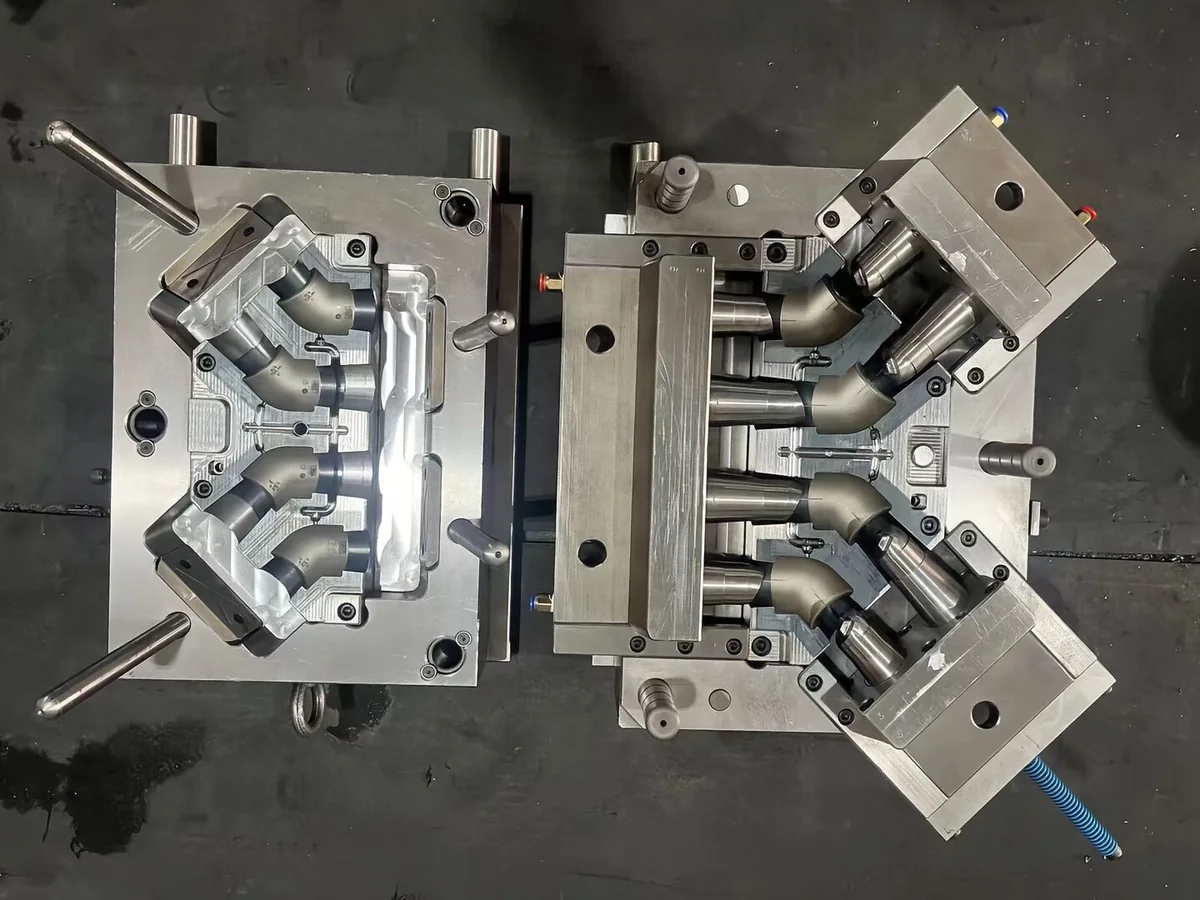
Four-Cavity Elbow Injection Mold: Shipped
A four-cavity elbow injection mold with shipment confirmed by JF MOULD, shown in the original project photo.
- Project
- A four-cavity injection mold for elbow fittings.
- Result
- JF MOULD confirms this four-cavity elbow mold has shipped.
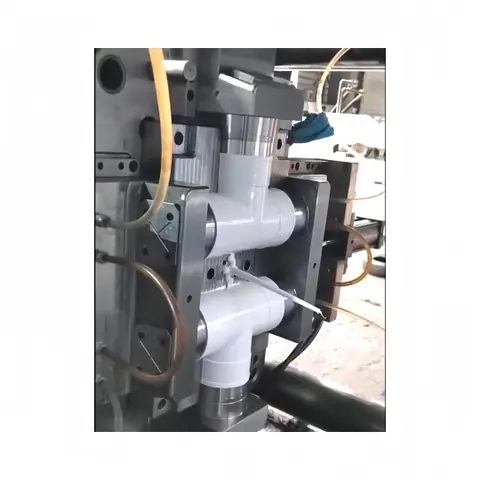
PVC Tee Pipe Fitting Mold Engineering Review
A bounded PVC tee mold technical example covering geometry, engineering checks, and the inputs needed before quotation.
- Review focus
- identify the tee-junction, sealing, branch, release, and core details that should be checked before quotation.
- Buyer inputs
- Provide the part file or fitting standard, resin, cavity target or annual volume, dimensional priorities, and leak-test expectations.
Technical ExampleEngineering review before quotation
Pipe FittingUnion connector Mold Technical Review
Technical example: define union components, thread fit, and gasket seal checks before quoting the tooling scope.
- Review focus
- Geometry to check: How do the nut, body, and seal seat mate, and which thread and gasket dimensions control assembly?
- Buyer inputs
- Send drawings or samples for every mating component, thread specification, gasket material, resin grade, assembly torque or fit target, annual volume, and machine limits.